Pakistan's Farmers Are a Climate Asset. We Make Them Investable.
Savak is Pakistan's leading agroforestry carbon platform. We mobilize smallholder farming communities across Pakistan, plant long-lived orchard trees on their land, and generate verified carbon credits that investors receive in return for their capital.

Activate a real community. Secure a future offset allocation.
Support moves Community 1 from onboarded farmers and mapped land into monitored agroforestry development, with 15,000 offsets allocated to the investor subject to validation, verification, issuance, and market rules.
Savak is named after the Sindhi word for green — the colour of fields, of orchards, of what this land has always produced, and of the future we are building toward. We are Pakistan's largest agroforestry project, working directly with smallholder farming communities in Mirpurkhas, Sindh.
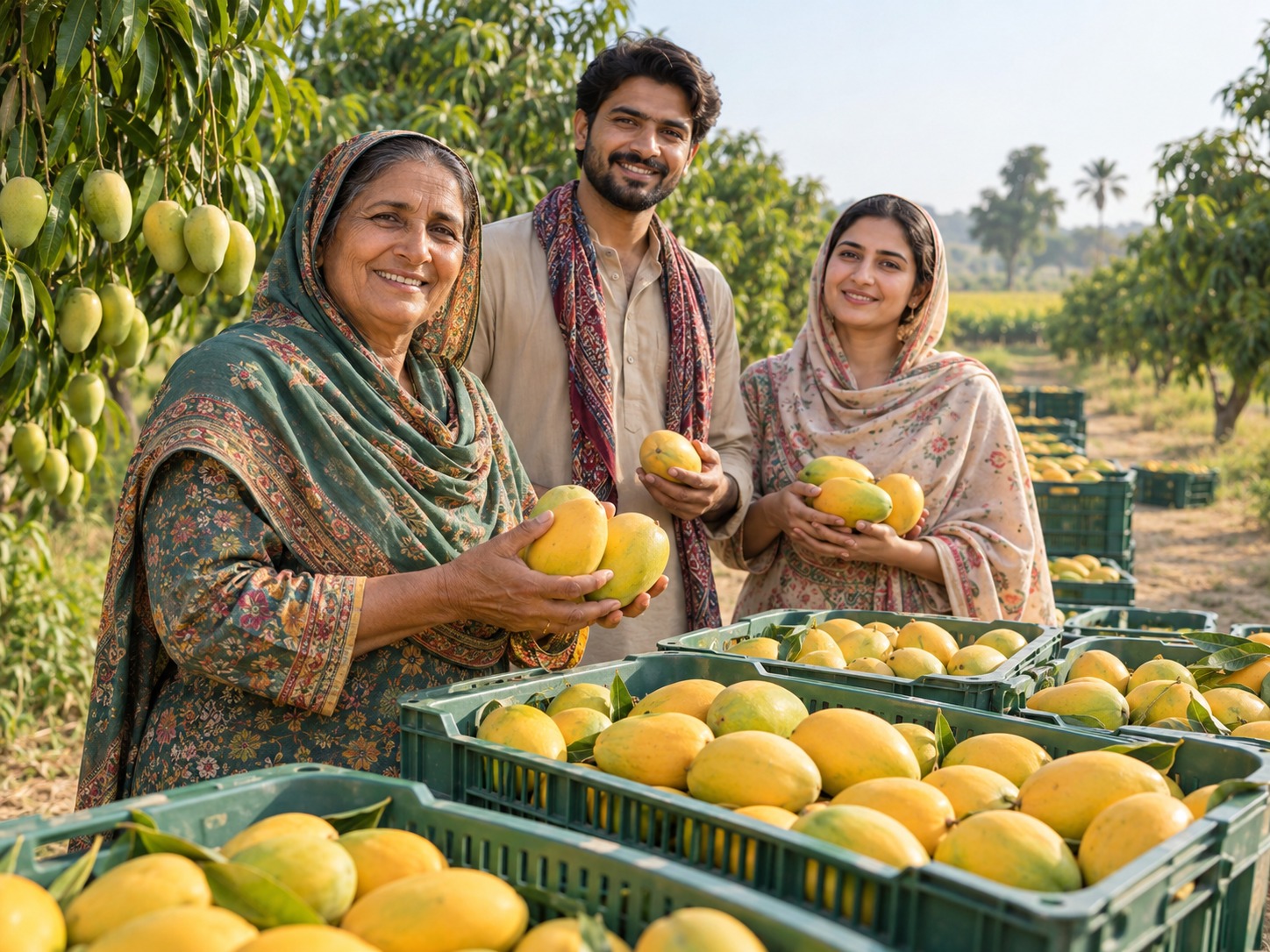
Smallholder farmers make up the backbone of Pakistan's agricultural economy. They work some of the most climate-exposed land in the world, absorbing the cost of heat stress, water scarcity, salinity, and flood risk — without the tools or financing to adapt. Savak changes that by combining climate finance with local farming knowledge.
The model is straightforward: we onboard farmers, design orchard-based agroforestry systems on their land, measure the carbon those trees sequester over a 40-year project life, and generate internationally verified carbon credits. Investors fund the project and receive those credits. Farmers keep their land, their produce, and a stronger livelihood.
How do carbon credits work?
Carbon credits are a mechanism to put a price on carbon removal, bought and sold by companies globally as part of their net-zero strategies. Here is the full picture — from what they are to what makes them valuable.

Land is walked, mapped, and monitored before a single credit is claimed.

Field teams verify progress directly with farmers, plot by plot.
Multinational corporations with net-zero commitments — airlines, manufacturers, banks, technology firms — purchase credits to offset residual emissions they cannot yet eliminate. Global corporate buyers retired over 176 million credits in 2024 (Ecosystem Marketplace, 2025). Demand is growing, and supply of high-quality nature-based credits is constrained.
The voluntary carbon market (VCM) is where companies choose to offset emissions beyond regulatory obligation. Pakistan's Carbon Market Policy Guidelines 2024 established a national framework for both voluntary and compliance carbon activity. Savak targets the VCM with Article 6.2 ambition, meaning credits can carry a corresponding adjustment for international transfer.
Credit prices are not uniform. They are determined by project type, methodology, vintage, co-benefits, and quality ratings. Nature-based removal credits — especially agroforestry and ARR — attract price premiums of 15–30% over avoidance credits (BIS Research, 2026).
Quality is what separates tradeable credits from stranded ones.
The global market has experienced a quality reset since 2023. Buyers — and their auditors — now scrutinise additionality, permanence, traceability, and community engagement before purchasing. Low-quality credits are increasingly unsellable. Projects structured under Core Carbon Principles-aligned methodologies like VM0047 sit at the premium end.
Savak is designed for this premium tier from the ground up — not as a retrofit. That is both a values choice and an investment logic: premium credits are what international buyers pay for and what domestic SECP disclosure requirements will increasingly reward.
How does your investment work?
This is not a donation and it is not equity. It is a defined carbon off-take: you fund community mobilization, and you receive a specified allocation of future verified carbon credits. Here is exactly how it flows.
Rs. 20 million in community activation costs — onboarding, GIS, agronomy, FPIC, orchard establishment, and MRV setup.
23 farmers in Mirpurkhas are onboarded, their 41 plots are surveyed and mapped, and orchard design is completed.
Trees across four species are planted across 536 acres. Growth is monitored via satellite and field teams across the 40-year project life.
An independent auditor verifies sequestration under a VM0047 supported pathway. Credits are issued on Verra's registry with full traceability.
15,000 verified offsets are transferred to your account. You sell internationally, hold, or use for ESG offsetting.
What you put in
Rs. 20 million activates Community 1 in full: farmer onboarding and consent (FPIC), GIS and land record verification, agronomy and plantation design, orchard establishment, digital MRV infrastructure, and validation preparation for the VM0047 pathway.
What you get back
The Community 1 investor receives rights to 15,000 future verified carbon offsets — the majority of the 25,000 net offset projection for Community 1. Savak retains the remainder to fund further project development. Credits are transferred to your account as they are issued.
Carbon credits, volumes, prices, transferability, and timing are subject to validation, monitoring, verification, issuance, host-country processes, and applicable market rules. Credit prices on voluntary markets are not guaranteed and vary with project quality, vintage, buyer demand, and market conditions. Savak's project design targets the premium-quality tier — but investors should assess this alongside all relevant commercial and regulatory considerations before committing. We are happy to walk prospective investors through the full project documentation and risk picture.
The regulatory and market case for acting early.
Carbon credit investment is no longer only a global story. Pakistan's regulatory environment is shifting fast, and the window for early-mover advantage in a shallow domestic market is open — but not indefinitely.
Pakistan launched formal Carbon Market Policy Guidelines at COP29 in November 2024, establishing a regulatory framework for voluntary and compliance carbon markets — including agriculture and forestry as priority sectors. Host Country Approval under Article 6.4 has already been issued for the first domestic project.
The Securities and Exchange Commission of Pakistan has mandated IFRS S1 and S2 sustainability disclosures for all publicly listed companies. From 2025, large businesses must report climate-related risks, emissions, and sustainability metrics. Verified domestic carbon credits provide a traceable, audit-ready ESG asset for corporate reporting — ahead of the mandatory enforcement phase.
In 2024, carbon offtake agreements were used to secure over 20 million nature-based credits — around 10% of all market retirements (Ecosystem Marketplace, 2025). Demand for high-quality ARR and agroforestry credits is outpacing supply. Early-stage investors who commit now lock in allocation before the pipeline is crowded. Pakistan's domestic pipeline of high-quality, verified projects remains very shallow.
Climate asset creation with a farmer face.
Savak is not only a carbon story, and it is not only a livelihood story. It is a structured bridge between mitigation finance and adaptation outcomes in one traceable project architecture.
Mitigation: carbon offsets with institutional discipline.
Community 1 is structured toward a VM0047 supported agroforestry pathway with Article 6.2 supported market ambition, a 40-year project life, and a defined investor allocation.
Adaptation: orchards that restore resilience.
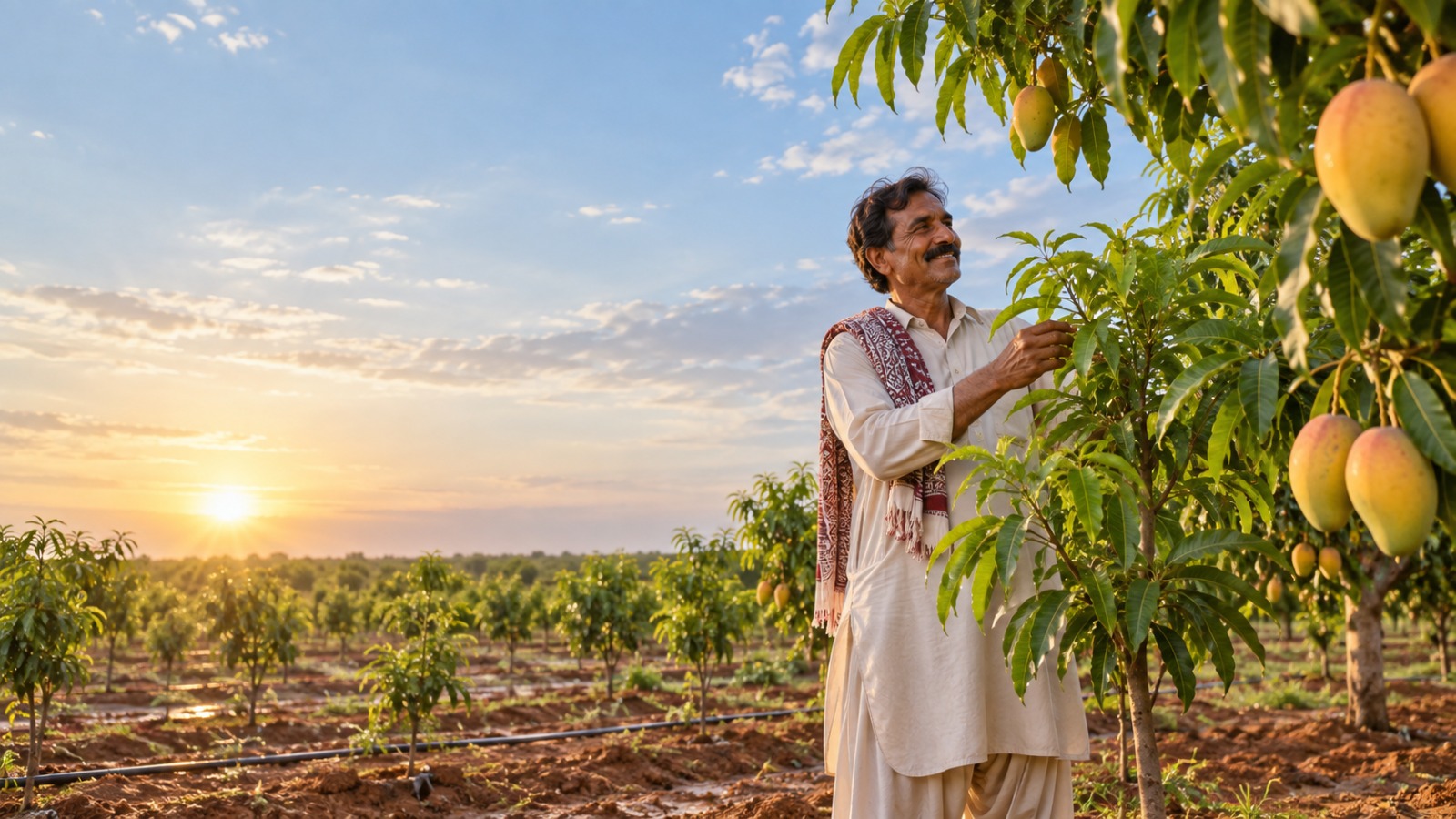
Farmers face heat stress, water uncertainty, salinity, flood exposure, and unstable crop income. Savak turns suitable land into long-term mango, chikoo, jamun, and lemon orchards.
The tree mix is deliberate: heritage, resilience, and farmer value.
Community 1 is focused on four fruit-bearing species selected for Mirpurkhas' ecology, farmer economics, climate resilience, and long-term carbon value. This is agronomic design, not generic tree planting.

Mango is native to the project story.
Mirpurkhas is one of Pakistan's most renowned mango regions. Savak builds on that agricultural identity while adding a climate-resilient orchard mix that improves farmer income and strengthens the carbon asset.
Chikoo trees
Chikoo is central to Community 1 because it is climate resilient and suitable for bio-saline conditions, giving farmers a stronger option where water and soil stress are real risks.
Mango trees
Mango anchors the project in Mirpurkhas' heritage and local farming knowledge, turning a familiar crop identity into a monitored climate asset.
Jamun trees
Jamun diversifies the orchard system, improves resilience, and supports shade, biodiversity, and long-term farmer value.
Lemon trees
Lemon adds earlier productive value and market relevance, helping farmers see near-term usefulness alongside long-term orchard development.
Real fields, real farmers, real project evidence.
For a corporate off-take to feel credible, the project needs more than dashboards. Savak shows the land, the farmer conversations, the orchard logic, and the community services that make long-term carbon performance possible.


Ameer Ahmed Jan
Mehran
Shakeel Ahmed
Javed Ahmed
Muhammad Hussain
Muhammad Qasim
Noor Muhammad
Javed Ahmed
Abul Hassan
Moula Bux
Afzal Ahmed
Aijaz Ali
Ali Ahmed
Muzafar Hussain
Amir Khan
Field journey
Ali Raza
Abdul Raheem
Muhammad Tayyab
Abdul Ghaffar
Zahid Ali
Shams Uddin
Javed Iqbal
Mehboob AhmedEverything visible before the offsets are issued.
The Savak dashboard gives corporate partners live evidence: farmers, plots, land records, species mix, project life, carbon offset allocation, investor portal access, and monitoring milestones.


Structured enough for investors. Local enough for farmers.
Savak's operating model turns a fragmented smallholder landscape into an investable project unit through screening gates, documented consent, agronomy planning, and continuous monitoring.

Built for credibility, not climate theatre.
Savak applies staged eligibility gates before land is admitted into the project pipeline. Plots are screened for land-use history, suitability, climate and flood risk, soil and water conditions, farmer consent, and agronomic viability.
The project is being structured toward a VM0047 pathway for agroforestry carbon removals. Carbon credits, volumes, prices, transferability, and timing remain subject to validation, monitoring, verification, issuance, host-country processes, and market rules. That discipline is the point: Savak gives corporates a credible way to participate before making claims that only verified outcomes can support.
An elite, Pakistan-based climate off-take for serious sustainability teams.
Savak gives corporates a stronger alternative to conventional CSR: traceable adaptation, future carbon offset allocation, Pak Green Taxonomy-aligned positioning, and live evidence for reporting and governance.
The investor receives 15,000 offsets from Community 1, subject to validation, verification, issuance, transferability, and applicable market rules.
The dashboard shows farmers, plots, acres, land records, species, project life, credit allocation, and milestones.
Position the investment across climate adaptation, sustainable agriculture, land restoration, and nature-based mitigation.
The project restores orchard livelihoods while improving resilience to heat, water stress, salinity, and income volatility.
A dedicated education benefit makes the community impact tangible, relatable, and locally meaningful.
VM0047 supported, Article 6.2 supported, long-horizon agroforestry designed for high-integrity market access.

Fund Community 1. Receive a defined future offset allocation.
Rs. 20 million activates 536 acres, 23 farmers, 41 plots, a 40-year project life, and 15,000 investor offsets from a 25,000 net-offset Community 1 package in Mirpurkhas.